
Charlotte Data Solutions 

Professional Structured Cabling in North Carolina

Commercial network cabling installation for offices, facilities, renovations, and new construction throughout Central and Western North Carolina.

Built on Decades of Network Cabling Experience
Charlotte Data Solutions brings more than 20 years of hands-on experience in commercial network and structured cabling, combined with 9 years of commercial construction management. That experience helps us approach cabling as part of the building—not simply as wires connecting one point to another.

Moving Into an Existing Office?

Don't Assume You Have to Start Over

An existing office may already have network cabling, racks, patch panels and other infrastructure in place—but that doesn't automatically mean everything should be reused or replaced.

Before beginning an office build-out or relocation, we can evaluate the existing infrastructure to determine what can remain, what should be repaired or reorganized, and what needs to be replaced. Sometimes the problems aren't immediately visible. Poor terminations, years of undocumented changes, damaged cabling or an overcrowded network rack can contribute to network performance problems, unreliable connections and unstable Wi-Fi.

The goal isn't to replace infrastructure unnecessarily. It's to understand what you already have and build from there.

Planning an office renovation or relocation? 

How We Approach Structured Cabling Projects.​

We Think Beyond the Cable
We consider the network racks, patch panels, pathways, Wi-Fi, equipment and future expansion—not simply how to get a cable from one location to another.

Built to Be Serviceable
Clean routing, consistent labeling and organized network racks make your infrastructure easier to troubleshoot, maintain and expand.

Construction & Network Experience
Our experience with both network infrastructure and commercial construction helps us coordinate with general contractors, IT teams and other trades.

Designed for What You Actually Need
From choosing the right cable to evaluating existing infrastructure, we help design around the requirements of the project without unnecessarily overspecifying it.

Actual Charlotte Data Solutions
Network Installations

“It Works” Isn't the Standard for
a Professional Installation​

We’ve encountered serious workmanship problems in some recently completed commercial cabling installations throughout Charlotte and North Carolina. In many cases, the network is technically working—but the installation behind it does not meet the standard we expect from professional structured cabling.

What We Found in a Brand-New Building

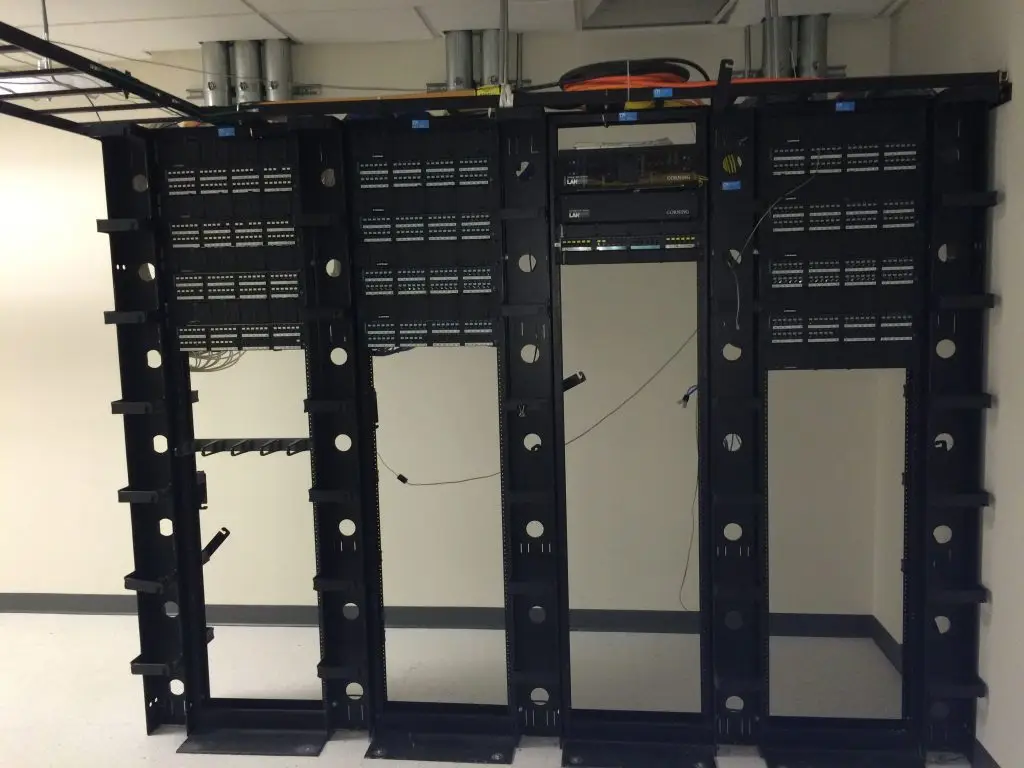
This was the completed network installation in a newly constructed commercial building.
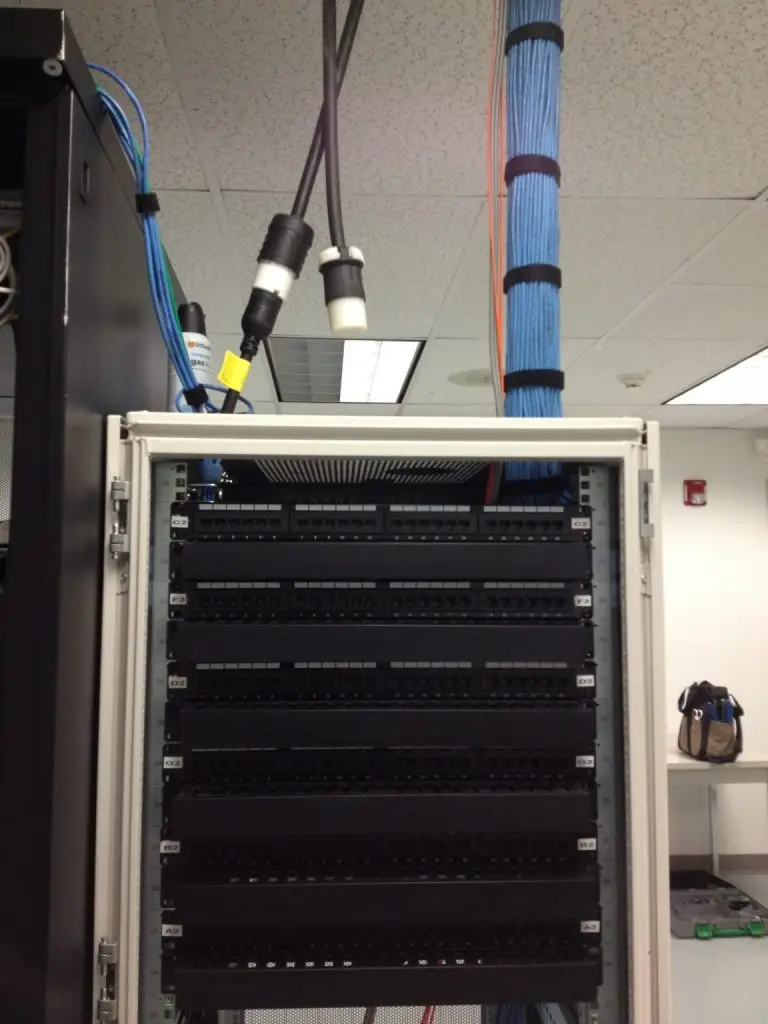
At first glance, the cable management was the obvious problem. For a brand-new installation, the network rack had already been left difficult to service and maintain. But as we looked closer, we found more concerns. There was no ventilation in the network closet and no network bonding. Conduit had been installed to provide pathways for the cabling, but rather than maintaining appropriate conduit fill and leaving room for future cabling, the conduits were packed with virtually no capacity remaining. Then we noticed something unusual on the left side of the rack—what appeared to be exposed cable pairs sticking out near the patch panels. That led us to look behind the panels.
What we found there was something a business owner would probably never see.
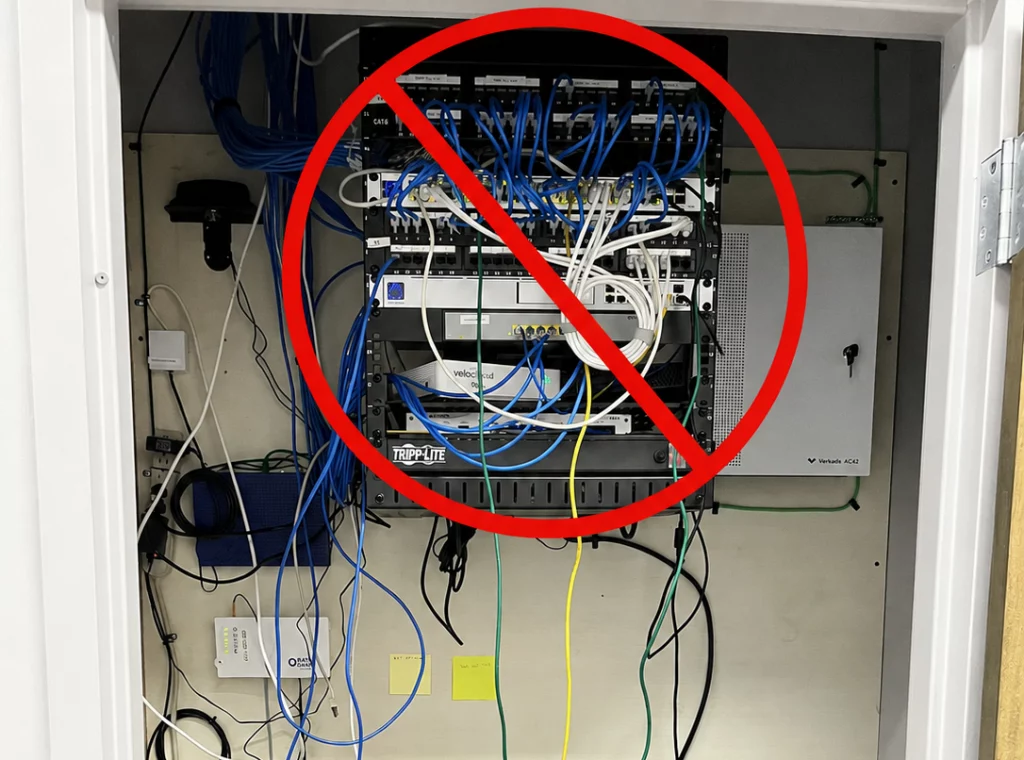
messy installation of a network rack in a closet of a new construction office building in Charlotte NC
Unacceptable Installation in New Construction Office Building in Charlotte NC
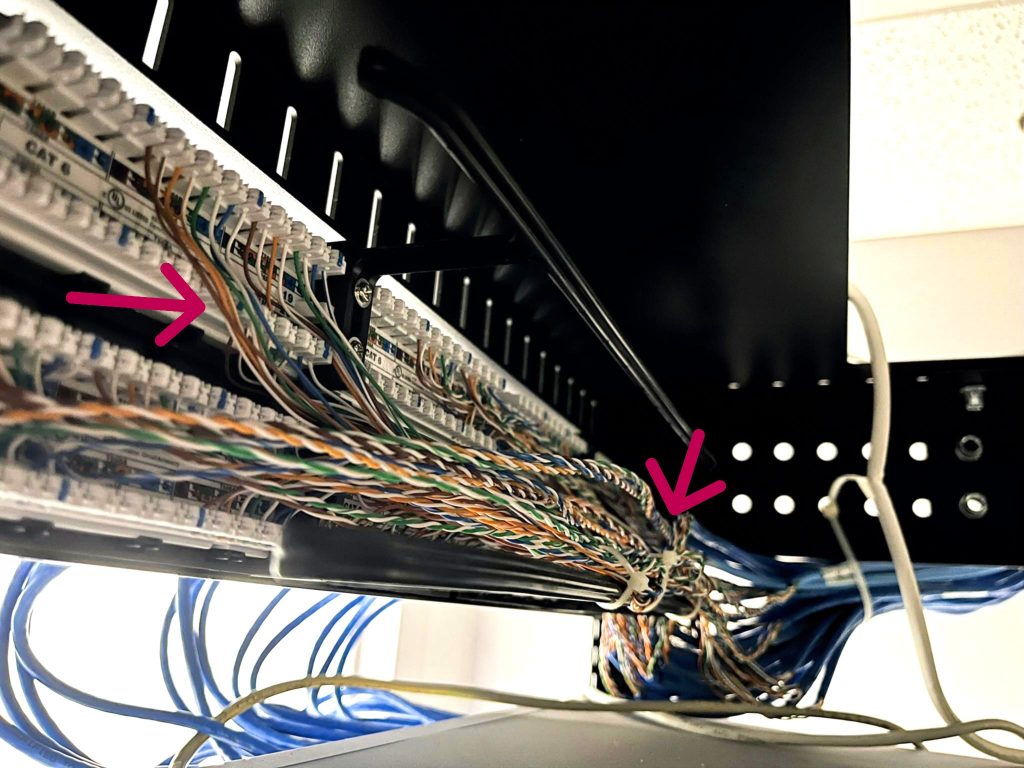
A bad termination of a cat 6 patch panel by a contractor on a new building in Charlotte NC
Excessive jacket removal and untwisted pairs found behind the patch panel which contributed to poor internet connections

Improper Patch Panel Termination

Looking behind the patch panel revealed problems that weren't visible from the front of the rack.The outer jackets on many of the cables had been stripped back far beyond the termination point—in some cases exposing approximately 24 inches of the individual twisted pairs before reaching the patch panel.

Looking closer, some of those individual pairs had also been untwisted well before the termination.

Ethernet cable isn't simply eight individual wires inside a blue jacket. The pairs are twisted as part of the cable's design. How the cable is prepared and terminated matters to the performance of the structured cabling system.When we brought what we found to the customer's attention, the response was essentially:“Well, it works.”And technically, at that moment, it did.But simply establishing a network connection isn't the standard we believe should define a professional structured cabling installation.

Proper cable preparation, maintaining the twisted pairs near the termination, cable support, labeling, testing and an organized, serviceable network rack all matter.

Don't Settle - Get Your Network Cabling Done Right

Your Network Can “Work” and Still Be Poorly Installed

Most business owners—and even many people managing a construction project—will never look behind a patch panel when a new building or office is turned over. They see new cabling, a new rack and blinking lights on the network equipment. Everything connects, so the project appears finished.

That's why it's important to understand what your cabling contractor considers a completed installation before awarding the work. 

Ask how the cabling will be supported and terminated. Ask how it will be labeled. Ask whether the completed cabling will be tested and what documentation you'll receive. And don't be afraid to ask to see examples of the contractor's finished installations.

What to Ask Your Data Cabling Contractor  --->

What Does Charlotte Data Solutions Do Differently?

We don't show these examples to criticize another contractor. We show them because most customers would never know what to look for. 

At Charlotte Data Solutions, we believe the quality of a structured cabling installation should be visible when the project is finished. Cable pathways should be organized, terminations should be completed properly, network racks should be serviceable, and labeling should make sense to the people who will maintain the system in the future.

We don't install cabling simply to get through the final day of the project. We build infrastructure with the expectation that someone will eventually need to troubleshoot it, modify it and expand it.

We build networks that we are proud to put our name on.

A professional installation should be
clean and serviceable where you can see it
—and properly installed where you can't.

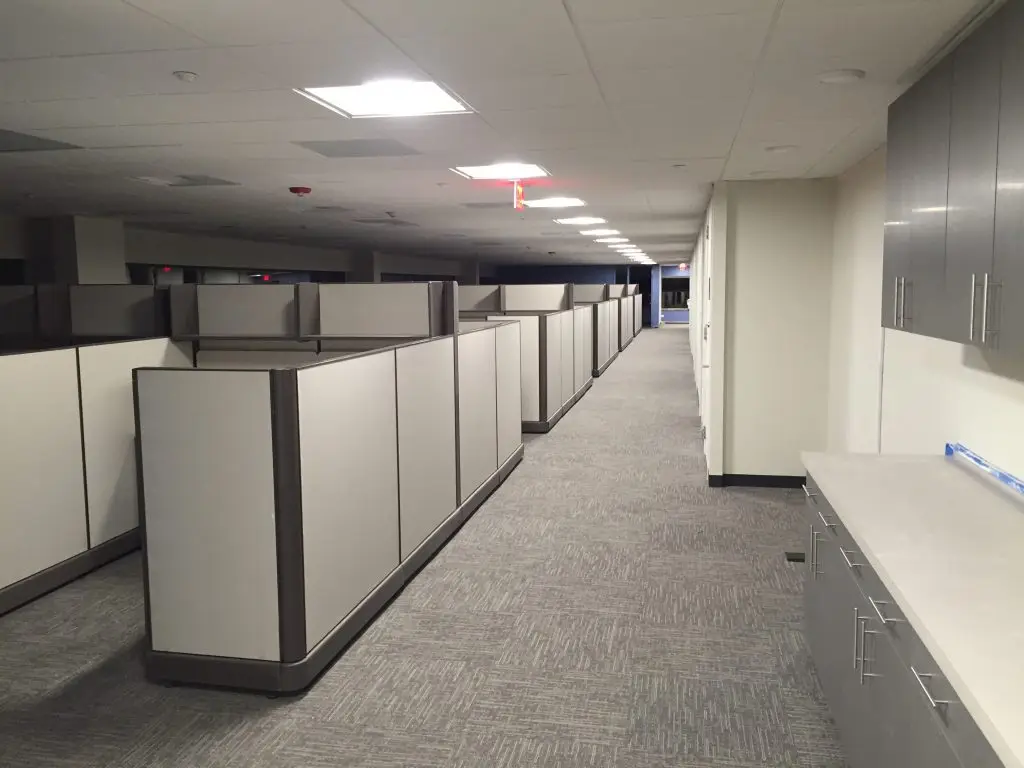
Charlotte Office Space that needs Wifi For its cubical workers. our wifi installers will provide great coverage

What Goes Into a Charlotte Data Solutions Network Cabling Installation?

Much of what determines the quality of a structured cabling installation eventually disappears above ceilings, behind walls and behind patch panels. That's why our standard doesn't change based on whether the customer can see it.

A professional structured cabling installation should do more than work on the day it is installed. It should be organized, properly terminated, clearly labeled and built so it can be serviced and expanded for years to come.

At Charlotte Data Solutions, we look at the entire cabling system—from the pathways above the ceiling to the termination at the workstation and the organization inside the network rack.

Proper Cable Routing & Support
Cabling is routed and supported with attention to the building, pathways and other trades. We plan the installation so cables aren’t simply placed wherever there happens to be room.

Professional Terminations
Proper termination preserves the construction of the cable as close to the termination point as practical. The details you can’t see after the faceplate or patch panel is installed are just as important to us as the finished appearance.

Clear, Consistent Labeling
Cables, jacks and patch-panel locations are labeled so connections can be identified later. Good labeling makes troubleshooting, moves, additions and future changes considerably easier.

Testing the Installation
The job isn’t finished just because a device connects. Installed cabling is tested so problems can be identified and corrected before the project is turned over.

Clean, Serviceable Network Racks
Patch panels, cable management and equipment should be arranged so technicians can access, troubleshoot and modify the network without fighting through the previous installation.

Planning for Tomorrow
Where possible, we consider future growth when planning pathways, rack space and cabling. Your network will change over time, and the infrastructure should make those changes easier—not harder.

Network Cabling Installation

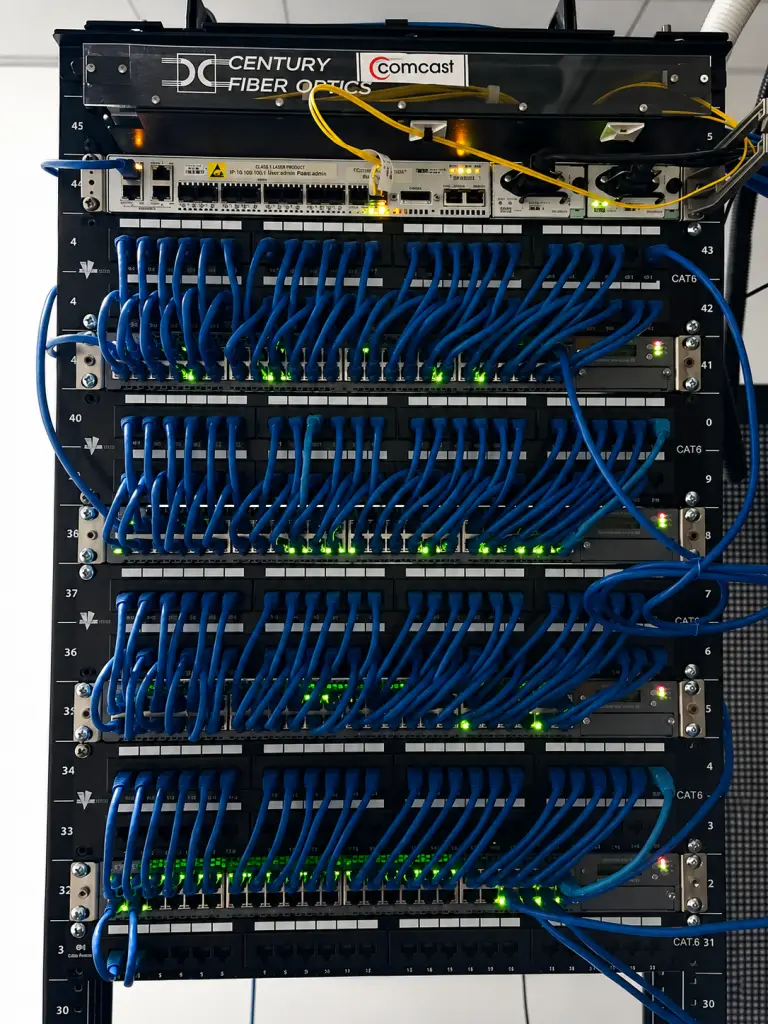
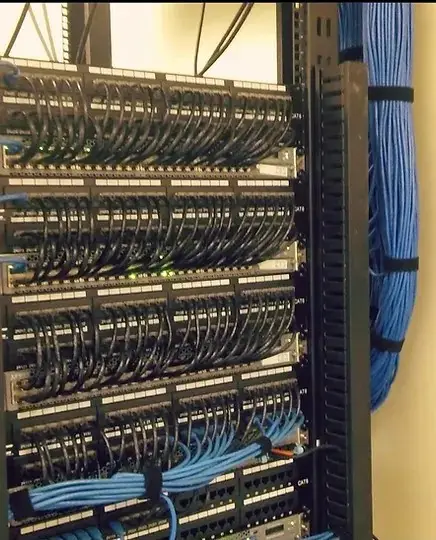
A professional network cabling installation should remain organized after the job is complete. Small details such as consistent labeling, organized patching and color-coded patch cables can make the network considerably easier to understand and service.

For example, different patch-cable colors can be used to distinguish IP phones, data connections or other network devices at the rack. These details may seem small during installation, but they can save considerable time when someone needs to troubleshoot, move or add equipment later.

Commercial Network Setup

Your network cabling is only the foundation. Whether you’re planning an office build-out, expanding an existing facility, or upgrading your current network, we can help configure the equipment that connects your business, including switches, routers, wireless access points and other network infrastructure.

 From VLANs and network segmentation to connecting multiple network closets and integrating wired and wireless systems, we build an organized network around the cabling we install.

Reliable Data Solutions

Structured Cabling Is Part of the Bigger Picture

We specialize in data cabling for office environments. Our team ensures high-quality installations, improving your network performance and reliability. Discover how our services can enhance your workspace efficiency today. We help businesses maintain consistent network infrastructure standards across multiple office locations throughout the Carolinas.

Network cabling rarely exists by itself. The cabling installed throughout your office connects back to the network rack, supports conference rooms and other connected systems, and often needs to be coordinated as part of an office build-out or renovation.

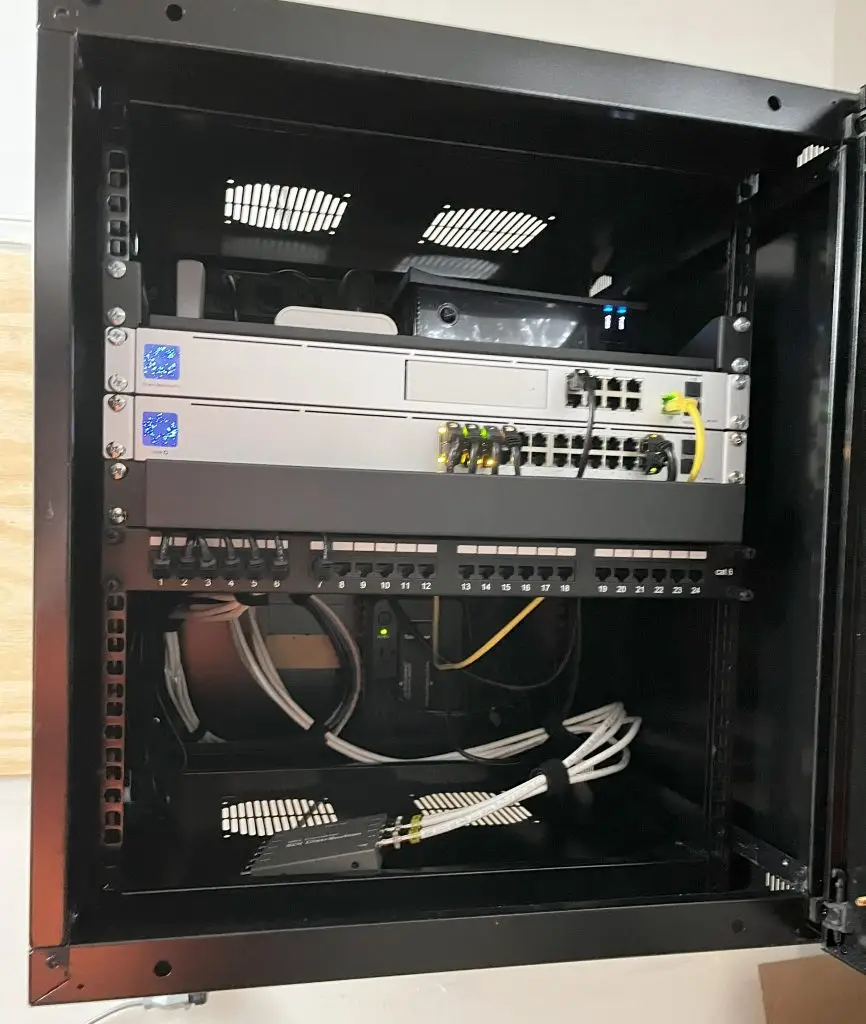
Network Rack Cleanups

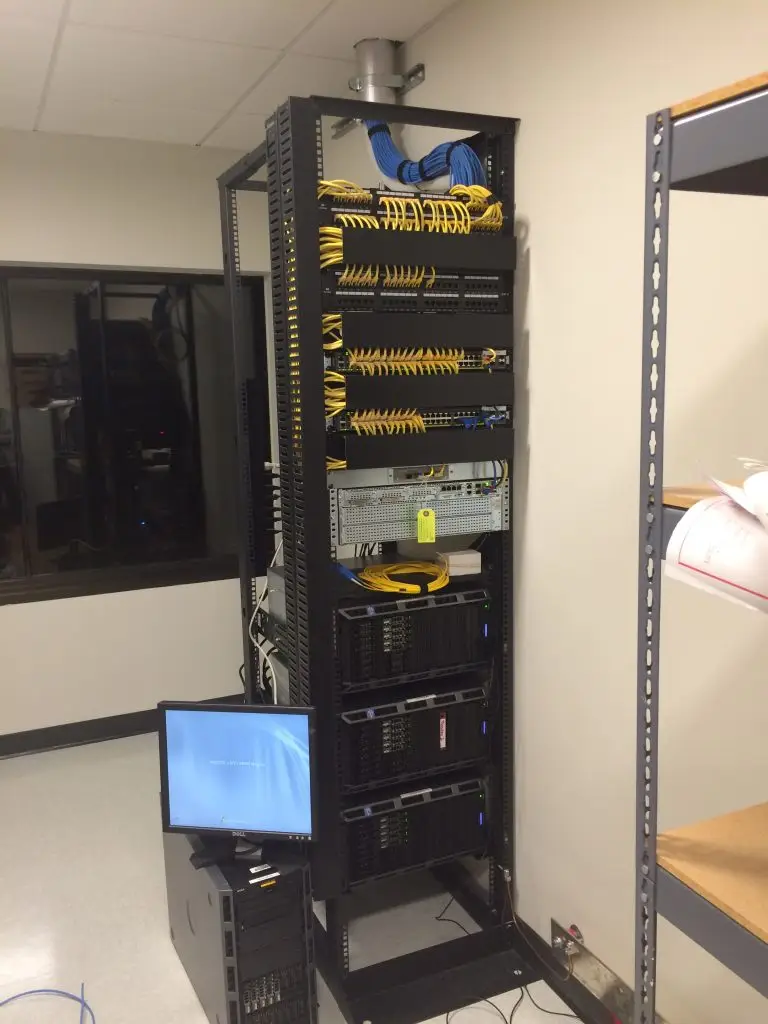
We provide structured cabling to your current network racks. Providing a clean and serviceable network that you can be proud of.

Conference Room A/V

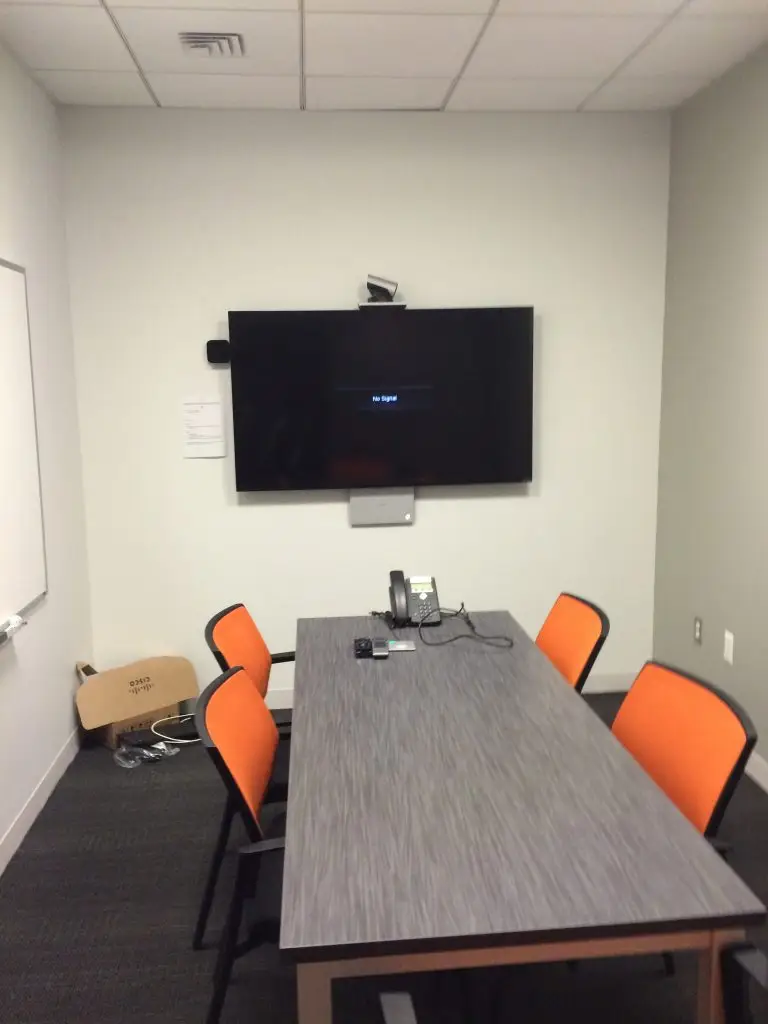
Conference rooms often require network connectivity along with displays, cameras, speakers and other A/V equipment. We have Audio Video Solutions for your AV needs

Office Build-Outs

Are you moving to a new office? Our experienced team understands job site timelines, trades, and how to keep projects moving. We work alongside your team

Data Cabling FAQ

Who should I call to install and Ethernet Cable in my Office?

Network cabling contractors who are experts with Structured cabling.  

Cat 6 or Cat 6a ethernet cabling should always be installed by a company who understands networking.  We have seen where the Data Cabling was given to the electricians to run, because “its just low voltage” However, we get many calls to fix cabling that was done by someone who was not qualified to do the job. Unfortunately, it is very common in Charlotte to see networks installed without reference to the TIA or BICSI  Standards. The result is that often the network does not work reliably. Read More about how selecting the wrong vendor can cause your network to fail after installation–>

Pricing depends on the number of cables needed, but a typical commercial network drop could range from $190–$300 per cable. The best way to get an accurate price for your project is to reach out to us. We’re happy to discuss your needs and provide a free written estimate.

Several factors can affect pricing. Does the building have accessible drop ceilings, finished drywall, or an open warehouse ceiling? How high are the ceilings? Will conduit or other pathways be required? What additional equipment is needed? Network racks, patch panels, cable management, conduit and other materials can all affect the overall cost of the project.

As a general example, many smaller office cabling projects might fall in the $5,000–$10,000 range, depending on those factors. A larger manufacturing plant or commercial facility requiring multiple IDFs. multiple buildings to be interconnected, all connected by fiber throughout the building could easily exceed $100,000.

Some older commercial buildings use the space above the drop ceiling as part of the building’s return-air system rather than using dedicated return-air ductwork.  This is particularly the case in the taller high rise building in Uptown Charlotte. When network cabling is installed in these plenum spaces, plenum-rated cable may be required.

However, in many cases, the newly designed buildings are not using this area above the drop ceiling as an air return. When that is the case, it is not considered a Plenumn space, therefore Plenumn cabling is not required. During a site evaluation, we can determine where the cabling will be installed and what cable rating is appropriate for the building.

Ethernet is always faster then WiFi regardless of the advertised speeds. 

there are many factors involved in this question.  However, a cable plugged into a computer will always give you a reliable connection.  Where as WiFi can give you a lot of trouble. For example, in many of the offices in the tall buildings, there could be 50 floors each with 5-10 offices, all with their own WiFi. all of that adds up to a lot of interference with your signals. Please see our blog article to read more about this fascinating topic. 

Yes. We have many years of experience working in high-rise buildings in major cities including Boston, Birmingham, and Charlotte. We understand the unique challenges that come with working in occupied commercial buildings, including coordinating access, working above finished ceilings, and determining how cabling will be routed through the building.

We can also work with the building’s existing infrastructure to determine how your suite connects back to the MDF or other network spaces within the building.

Yes. We can provide detailed project documentation and as-built drawings when required. This can include cable locations and pathways, labeling, and documentation of deviations from the original drawings or project specifications.

On larger construction projects, we can also work within the project’s documentation process, including RFIs, submittals, drawings and specifications, and coordinate with the design and construction teams as required.

Yes. Charlotte Data Solutions is fully insured, and we can provide a Certificate of Insurance (COI) when required.

This is an important question to ask any contractor working in your building. Very low cabling quotes can sometimes come from contractors with limited experience, inadequate insurance, or other differences that aren’t obvious when comparing only the final price.

When comparing proposals, make sure you’re comparing more than the cost per cable. Experience, insurance, installation standards, testing, documentation and the actual scope of work all matter.

Yes. We provide written estimates with as much detail as possible about the work we are proposing. We want our clients to understand what is included, what equipment and materials are being provided, and what they should expect from the completed installation.

A detailed estimate also makes it easier to compare proposals from multiple contractors. If another company is bidding something differently, the scope should help identify where the proposals differ rather than leaving you to compare two bottom-line numbers that may not include the same work.

Our goal is simple: what you expect us to deliver should match what we are actually proposing to install.

For most commercial offices, Cat6 is more than sufficient. We frequently hear, “Cat7 or Cat8 is a bigger number, so it must be better.” But installing a higher-category cable doesn't automatically make your network faster, nor does it necessarily make your network more future-proof.

For typical office network cabling, the practical decision is usually between Cat6 and Cat6A. Cat8 was designed primarily for very high-speed, short-distance connections in data centers—not for typical workstation cabling throughout an office.
We can evaluate your network, equipment and future needs and recommend the appropriate cable rather than simply recommending the highest category available.

There's more to this decision. When does Cat6A make sense? When would Cat8 actually be useful? How do higher-power PoE devices affect cable selection? Read our additional articles on these topics →

Often, yes. Moving into a new office doesn't necessarily mean the existing network cabling needs to be replaced. We can evaluate the existing cabling, terminations and network infrastructure to determine what can be reused and what may need to be repaired, upgraded or replaced.

The goal isn't to replace infrastructure unnecessarily. It's to understand what you already have and build from there.

Learn More: Moving Into an Existing Office? Don’t Assume You Have to Start Over →

For planning purposes, you can generally figure on one to two days for a typical 5–12 drop office with a single network cabinet. A larger office with 24–48 drops one to two weeks.

Projects with multiple network rooms, more complicated cable pathways, fiber connections, audio/video installations, or network design and deployment may take longer depending on the complexity of the project

If your office is under construction, our work is coordinated with the other trades and typically does not add time to the overall construction schedule.

Yes. Every network cable should be properly tested before a project is considered complete. We perform cable verification on the cabling we install, which goes beyond a basic continuity or pinout test.

Full cable certification is a separate level of testing, commonly required in data centers, mission-critical systems, or projects where certification is specified in the construction documents. For most typical office installations, verification provides the appropriate level of testing.

Learn More: Network Cable Testing — Continuity vs. Verification vs. Certification →

Charlotte Metro

  • Charlotte
  • Concord
  • Kannapolis
  • Huntersville
  • Mooresville
  • Gastonia
  • Matthews
  • Pineville
  • Fort Mill, SC
  • Rock Hill, SC

Hickory / Unifour

  • Hickory
  • Conover
  • Newton
  • Lenoir
  • Morganton
  • Statesville


Western NC 

  • Ashville
  • Arden
  • Hendersonville


Piedmont Triad

  • Salisbury
  • Lexington
  • High Point
  • Winston-Salem
  • Greensboro


Planning a New Office, Upgrading Your Network, or Fixing Existing Infrastructure?